
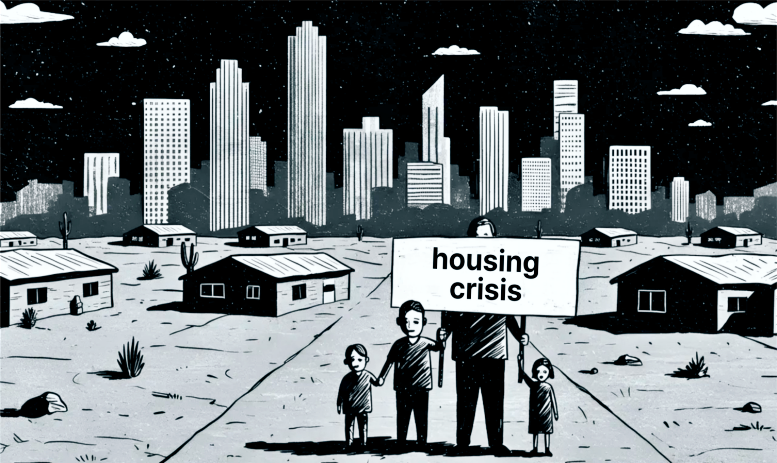
아리조나주에서 주택 부족과 임금 정체가 맞물리며 노숙 및 주거 불안 문제가 심화되고 있다.
마리코파 카운티의 퇴거(임대차 해지) 소송 접수 건수는 2024년 사상 최고치인 8만7천 건을 넘겼고, 인구 증가에 비해 새 주택 공급이 크게 뒤처지면서 수만 명의 거주자가 위기에 직면해 있다는 지적이다.
아리조나의 주택난은 전체 사회에 영향을 미치지만 특히 취약 계층에 더 큰 타격을 준다.
뜨거운 기후 조건에서 주거가 없는 사람들은 음식·의료 등 기본적 생활 수단을 확보하기 어려울 뿐만 아니라 폭력·절도 피해에 노출될 위험이 크고, 온열(heat-related) 사망률이 높아지는 등 생명 위협까지 이어진다.
인구 급증도 문제를 키우고 있다.
아리조나주 경제기회국(Arizona Office of Economic Opportunity)에 따르면 2020년 이후 2025년 중반까지 주민 수가 46만 명 이상 증가했다.
캘리포니아 등을 중심으로 인접 주에서 유입되는 인구가 많은 가운데, 이러한 수요 증가를 따라잡을 만큼의 주택 공급이 이뤄지지 못하고 있다.
주택 공급 부족의 배경으로는 토지·건축비 상승과 함께 엄격한 용도 규제(zoning)가 지목된다.
아리조나의 많은 지역이 단독주택 전용으로 규제되어 다(多)가구 주택(다세대 주택) 개발이 어렵고, 토지 비용과 건설비 부담으로 신규 주택 공급이 제한된다는 설명이다.
또한 저소득층 주택 공급을 위한 저소득층 주택세액공제(LIHTC) 사업의 경우에도 자금 규모가 큰 사업(2022년 기준 일부 수상 프로젝트는 900만~4,500만 달러 수준)이 포함되는 등 제한적이라는 지적이 있다.
가계 소득 정체도 주민들의 주거 불안을 심화시키고 있다.
‘National Low Income Housing Correlation’의 조사 결과, 아리조나에서 시중 평균 수준의 2베드룸 임대료(공정시장임대료 FMR 기준, 월 1,700달러)를 감당하려면 시간당 32.70달러의 임금이 필요하다고 한다.
많은 근로자의 소득이 이에 못 미치면서 임대료 부담이 커지고, 매달 임대료 지급과 퇴거 우려가 큰 스트레스로 작용하고 있다.
연방 및 주 차원의 지원 프로그램과 민간·비영리 단체의 지원이 있긴 하지만 수요에 비해 한계가 분명하다.
연방의 저소득층 주택세액공제(LIHTC)와 미 주택도시개발부(HUD)의 주거 지원 프로그램이 존재하며, 주택 선택 바우처(Housing Choice Voucher, 흔히 ‘섹션8’이라 불리는 프로그램)와 긴급 주택 바우처(Emergency Housing Vouchers, EHV)가 임대료 일부를 지원하지만 대기 경쟁이 치열해 실제 지원을 받기까지 시간이 많이 걸리는 경우가 많다.
비영리단체들도 중요한 역할을 하고 있다.
긴급 쉼터 제공부터 계약금·다운페이먼트 지원까지 다양한 서비스를 제공하는 Trellis, Arizona Community Foundation, Arizona Housing Fund 등 단체들이 어려운 이들을 돕고 있으나, 전반적인 수요를 해소하기에는 역부족이라는 평가다.
아리조나주 내 비영리단체 관계자들의 우려도 크다.
Arizona Housing Fund 창립자 하워드 에프스타인(Howard Epstein)은 “이 문제는 두 가지 이유로 악화되고 있다. 하나는 인구가 계속 늘어나는데 노숙인 수도 증가하고 새로 공급되는 주택이 이를 따라잡지 못한다는 점이고, 둘째는 많은 관련 자금이 연방정부에서 나오는데 현재 연방 자금 사정이 여의치 않아 상황이 더 악화되고 있다”고 지적했다.
전문가들은 근본적 해결을 위해 제도·재정적 접근이 병행돼야 한다고 말한다.
구체적으로는 단독주택 전용 규제 완화 등 용도 규제 개편을 통해 다세대 주택 공급을 촉진하고, LIHTC 등 저소득층 주택지원 프로그램에 대한 투자 확대와 임대 보조(렌털 어시스턴스) 강화를 통해 소득과 주거비용 간 격차를 줄여야 한다는 제언이다.
이러한 노력이 축적돼야만 주택 위기에 묶여 있는 이들을 장기적으로 해방시킬 수 있다는 분석이다.
아래는 영어 기사 내용 전문.
Americans nationwide have seen the climbing numbers in those experiencing homelessness. Affordable housing has become a worsening issue, and people have become almost apathetic towards the subject. However, the problem threatens the lives of tens of thousands of residents in Arizona, with eviction rates in Maricopa County reaching a record high in 2024, with over 87,000 filings, according to the Maricopa County Justice Courts. The lack of housing units in comparison to the number of residents, along with stagnant wages, put residents in serious jeopardy. Policymakers should take impactful actions to address the housing crisis throughout Arizona by increasing investments and bridging the income and housing costs through further rental assistance.
The housing crisis affects everyone, but hits hard those who are most vulnerable. Especially under the scorching heat of Arizona, people without housing face serious challenges. Along with the lack of fundamental needs, such as food and healthcare, these populations are at higher risk of being victims of violence and theft, and face higher mortality rates, many due to heat-related causes.
As one of the fastest-growing states in the nation, Arizona has seen a rise in population by more than 460,000 from 2020 to mid-2025, according to the Arizona Office of Economic Opportunity. There is an influx of residents from neighboring states, with California being the largest contributor to the Phoenix metro area. An inefficient housing supply to accompany these rising populations stems from factors such as increased prices of land and construction in Arizona and restrictive zoning. Restrictive zoning causes many areas in Arizona to be exclusively zoned for single-family homes, making it hard to build multi-family developments. Construction is also expensive, especially when it comes to land. In 2022, 9% of the Low-Income Housing Tax Credits (LIHTC) awarded projects ranged from $9 million to $45 million, according to the Morrison Institute.
As most Americans have learned, the economy has always been a major issue and continues to be a major concern in the nation. The income of Arizonans has been largely stagnant over the past couple of years, while the prices of homes are spiking. According to the National Low Income Housing Correlation, a full-time worker in Arizona must earn “an hourly Housing Wage of $32.70 to afford the average Fair Market Rent (FMR) for a two-bedroom rental home ($1,700).” The costs of rent heavily outweigh the income that some Arizonans earn, inciting stress of making monthly payments and the fear of eviction.
Various projects and vouchers aim to alleviate this challenge among Arizona residents. Although limited, the LIHTC program also attempts to provide affordable housing developments. The U.S. Department of Housing and Urban Development (HUD) provides resources for low-income individuals and families. The Housing Choice Voucher Program (Section 8) and Emergency Housing Vouchers (EHV) assist in funding a portion of the rent; however, these programs also tend to be very competitive.
Along with the government, which plays a major role in helping fund housing for low-income families and individuals, non-profits offer a helping hand to those in need. Ranging from emergency shelters to downpayment assistance, nonprofits, such as Trellis, Arizona Community Foundation, and Arizona Housing Fund, play a crucial role in assisting those in need.
However, this help is minimal. Howard Epstein, founder of Arizona Housing Fund, explains, “It’s [a challenge] that’s getting worse for two reasons. One, the population continues to grow, while the number of people without housing also increases, and the new housing coming online isn’t keeping pace. And secondly, things are a little exasperated right now with our US government and funds because a lot of these funds that help these programs come from the US government.”
While the housing crisis continues to worsen, there are not enough solutions to satisfy the needs of housing units. While non-profits and programs play a part in alleviating the immense burden, there needs to be strong policies and investments put in place for restrictive zoning and programs like the LIHTC. Slowly, these efforts would pile up to eventually free those bound by the housing crisis.

샌드라 데이 오코너 고등학교 신문 편집장
니콜 지유 엄(Nicole Jiyoo Eom)
 한인 노인아파트 건립, 우리도 가능할까? -피닉스 한인회 진재만 ...
 서리는 내렸건만 열매는 아직 익지를 않았다 -이여근